


Introduction
Industrial solvents are expensive resources that are crucial to manufacturing pharmaceuticals, paints, electronics, automotive parts, and many other industrial products. Efficient recovery of solvents helps manufacturers control production costs and ensure optimal resource utilization. Meanwhile, compliance with safety regulations helps manufacturers avoid penalties and contribute to sustainable development.
This blog aims to provide industrial manufacturers with actionable insights to boost the efficiency of solvent recovery systems while ensuring audit-safe operations.
Table of Contents:
- What is the Solvent Recovery Process
- Working Principle of Solvent Recovery Systems
- Industrial Applications of Solvent Recovery Systems
- Tips to Ensure Higher Efficiency
- Standard Operating Procedure
- Rich Smart Tech Product Information
- FAQs
What is the Solvent Recovery Process, and Why is it Used in Industries?
Solvents, including ketones, toluene, alcohols, and other mixed solvents, are used in industry to dissolve, suspend, and extract substances across various processes. After use, these solvents are left contaminated with foreign particles and waste materials, rendering them useless. With a 95% recovery rate, the solvent recovery system turns waste solvent into a reusable product.
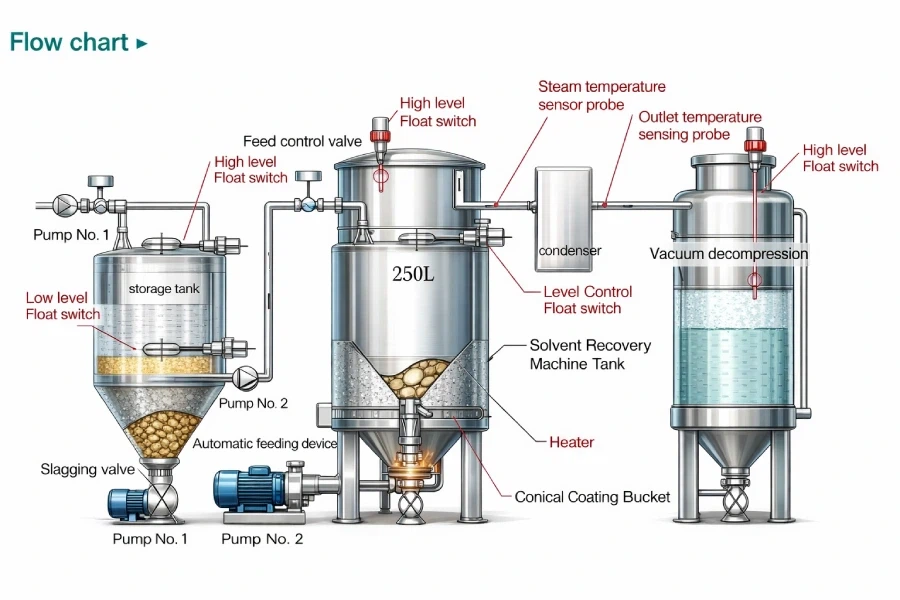
Industrial Solvent Recovery Working Principle:
- Used Solvent Collection
Contaminated solvent is gathered from industrial processes
- Pre-Treatment (Filtration / Solid Removal)
Suspended particles and impurities are removed
- Heating / Distillation
Solvent is heated to separate components based on boiling points
- Vaporization
Target converts solvents into vapor, leaving heavier contaminants behind
- Condensation
Vapor is cooled and converted back into liquid form
- Recovered Solvent
Purified solvent is collected for reuse
- Residue / Waste Disposal
Non-volatile impurities and sludge are safely disposed of.
Uses of Industrial Solvent Recovery Process:
|
Industry |
Applications of Solvent Recovery |
Important Considerations |
|
Pharmaceuticals |
Recovery of solvents used in drug formulation, extraction, and API manufacturing |
High purity requirements, GMP compliance, contamination control, solvent trace limits |
|
Chemical Manufacturing |
Reuse of solvents in synthesis, reactions, and cleaning processes |
Compatibility with multiple solvents, corrosion resistance, and process safety standards |
|
Paints & Coatings |
Recovery of solvents from paint formulation, thinning, and equipment cleaning |
Handling volatile organic compounds (VOCs), explosion-proof systems, and emission control |
|
Printing & Packaging |
Recovery of inks and cleaning solvents used in printing processes |
Ink contamination management, consistent solvent quality, and fast recovery cycles |
|
Food & Beverage |
Recovery of food-grade solvents used in extraction (eg, oils, flavors) |
Food safety standards, non-toxic solvents, strict hygiene, and regulatory compliance |
|
Electronics & Semiconductors |
Recovery of high-purity solvents used in cleaning and etching processes |
Ultra-high purity levels, moisture control, precision filtration systems |
|
Automotive & Aerospace |
Recovery of degreasing and cleaning solvents for metal parts |
Removal of oils and greases, consistent solvent performance, and safety in handling flammable solvents |
Expert Tips to Ensure Efficient Solvent Recovery
Higher recovery rates, longer operating times, lower energy consumption, and overall improved quality are key benefits of an efficient solvent recovery process. The following tips will provide you with deeper insights into how you can gain control over the production bottlenecks to achieve better efficiency:
1. Choose the Adequate Recovery Process
To maximize solvent recovery and handle complex solvent mixtures, manufacturers must choose the appropriate recovery method. This will ensure the solvent is not degraded and is recovered in the highest quality.
Commonly used solvent recovery methods:
- Azeotropic distillation
- Membrane separation
- Adsorption (activated carbon)
- Condensation recovery.
2. Track Temperature, Pressure, and Other Critical Parameters
An automated, well-calibrated monitoring system must be installed to control temperature, pressure, flow rate, and the final condensation process. This will ensure a streamlined process and reproducible results.
3. Cleaning and Maintenance
Cleaning and maintaining the solvent recovery system after each batch or at regular intervals prevents contamination and equipment blockage.
Solvent Recovery Equipment by Rich Smart Tech is specifically designed with a modular approach, reducing maintenance frequency and longer operations without cleaning requirements
4. Choose Wisely Between Continued or Batch Production
Batch-based solvent removal is ideal for variable solvent volumes, different subsequent solvents, and high-purity needs. Meanwhile, a continuous recovery process is ideal for manufacturers who work with stable solvent volumes.
5. Introduce Central Control Panel
Integrating a central control panel enables manufacturers to address fluctuations and deviations from the expected results. It also enables precise control of subsequent processes to keep different solvent-removal phases in sync.
6. Pick Adequate Solvent Recovery Equipment
Whether it is achieving the highest purity, reducing the maintenance requirements, or handling abrasive/toxic solvents, as long as you have the right equipment, efficiency is assured.
For personalized guidance, send in your production details or schedule a consultation .
Standard Operating Procedure for Safer Solvent Recovery
Efficiency and safety are closely related in solvent recovery systems. Using a closed loop solvent recovery , following the usage guide, and other safety measures, provides safety and improves overall efficiency by promoting globally approved practices.
Here are some of the important protocols mandatory for ensuring process safety in handling solvent :
- Proper ventilation
Prevents buildup of flammable or toxic solvent vapors.
- Explosion-proof equipment
Avoids ignition in flammable environments.
- Temperature & pressure control
Prevents overheating, overpressure, and system failure.
- Grounding and bonding
Eliminates static discharge during solvent handling.
- Leak detection and regular inspection n
Stops solvent loss and reduces fire/toxic exposure risks.
- Fire protection systems
Ensures quick response to fire hazards (extinguishers/suppression).
- Use of appropriate PPE
Protects workers from chemical exposure and accidents.
Customizable Solvent Recovery System by Rich Smart Tech
Solvent recovery equipment by Rich Smart Tech is backed by positive reviews and proven results. Our recovering or solvent recycling system and equipment are designed by a team of industrial experts with extensive experience meeting complex requirements across multiple industries.
More information regarding our solvent recovery machines:
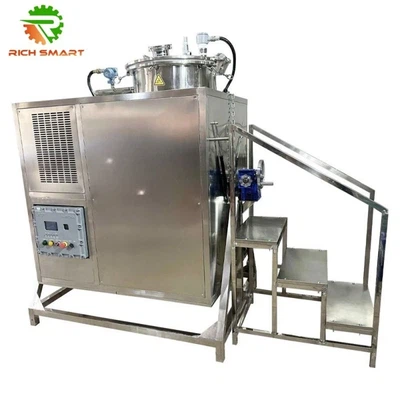
- Available for different recovery volume capacities - 40L to 450L
- Easy residue removal for proper waste management
- 95% recovery rate
- Explosion-proof certificate, GB3836.1-2000 and GB3836.2-2000 standards compliance
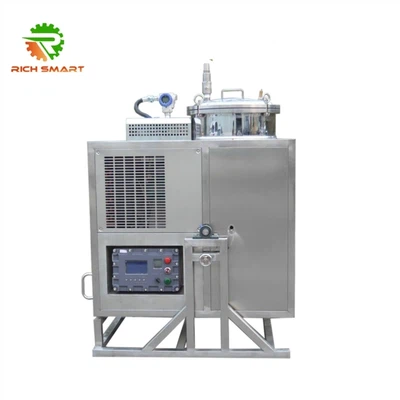
- 250L processing capacity with a durable and corrosion-resistant body
- Above 90% solvent recovery rate
- T6 grade explosion-proof construction
- Automatic shutdown after operations
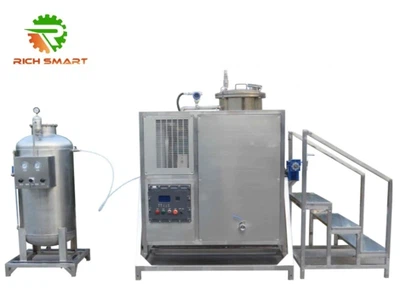
- 40L per hour recovery rate
- Continues operations for 24 hours a day
- Mitsubishi control panels for accurate monitoring and control
- Equipped with emergency shutdown systems
- Compliance with ATEX and CNEX standards for explosion-proofing
- Easy to use and monitor with a digital display
- Low maintenance cost, ensuring higher profitability.
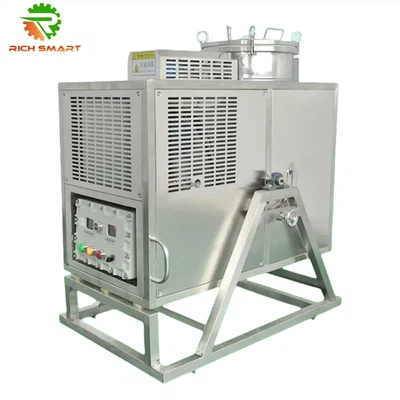
Each solvent recovery system mentioned above is fully customizable and can answer all your process and product-specific requirements. Moreover, our expert engineers will guide you in reducing production bottlenecks to achieve significantly higher efficiency.
Consult with our experts and get data-driven insights before investing in a solvent recovery system.
FAQs
Q.1: Why does solvent recovery require constant monitoring?
A: The distillation recovery system should be constantly monitored due to the following reasons:
- Ensures consistent solvent recovery efficiency
- Prevents contamination of recovered solvent
- Detects safety risks like leaks or overheating
- Protects equipment from damage and wear.
Q.2: What is the role of staff training in process safety in solvent handling?
A: Staff training prevents spills, leaks, and damage to the equipment by minimizing human errors. Therefore, process safety in solvent handling is significantly improved through appropriate staff training.
Q.3: How does the solvent volume govern the solvent recovery quality?
A: The volume of solvents in a solvent recycling system is crucial to achieving the desired results. Higher volume increases pressure and overloads the machine, leading to costly maintenance and repairs. Meanwhile, an adequate solvent volume enables effective recovery, uniform heat transfer, and a maximum recovery percentage.
Q.4: What kinds of solvents can be recovered with Rich Smart Tech recovery equipment?
A: Our flexible distillation recovery system can handle a wide range of solvents, including toluene, alcohol, screen washing water, anti-white water, ketone, and halogen compounds. Moreover, our equipment achieves a 95% recovery rate.
Q.5: Why is solvent waste disposal important for industrial manufacturers?
A: Key reasons:
- Prevents environmental pollution and soil/water contamination
- Ensures compliance with legal and environmental regulations
- Reduces health risks to workers and nearby communities
- Minimizes fire and toxicity hazards from improper storage.


