

Advanced Process Solutions for Chemical & Pharmaceutical Manufacturing
Introduction: Precision Engineering for Complex Processes
In the chemical and pharmaceutical industries, efficient process integration from raw material pretreatment to final product isolation defines competitive advantage. As a source manufacturer with vertically integrated capabilities, we deliver engineered solutions that address critical challenges in scalability, compliance, and sustainability. This guide explores application-specific technologies across core workflows, supported by performance data and industry benchmarks.
I. Raw Material Pretreatment: Foundations of Quality
Objective: Ensure feedstock uniformity and reactivity while removing impurities.
A. Solid Processing
Grinding & Milling: Achieve particle sizes ≤10μm for enhanced dissolution in API synthesis.
Liquid-Solid Mixing: Homogeneous slurry preparation for catalytic reactions.
Recommended Product: High-Shear Mixer HSM-300
- Capacity: 50-5,000L
- Shear rate: 15,000 rpm
- Materials: 316L SS/PTFE-coated
- Applications: Catalyst-slurry prep, cell culture media homogenization :cite[3]
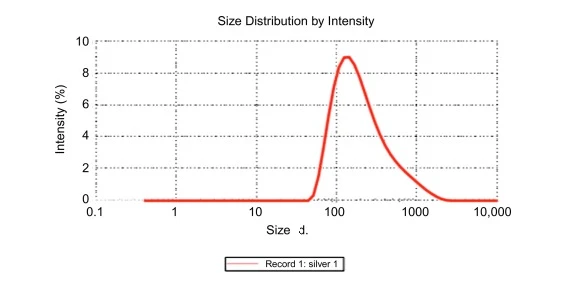
[Image : Micrograph showing particle size distribution pre/post treatment]
B. Liquid Homogenization
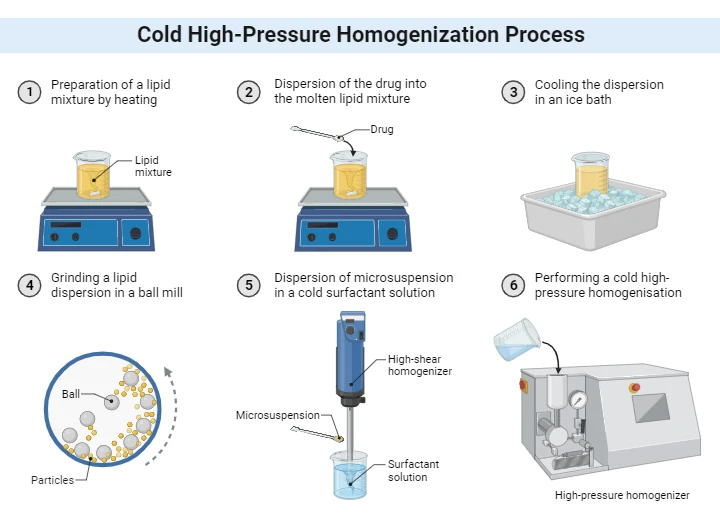
Nanoparticle Formation: Lipid carriers for drug delivery via high-pressure processing.
Emulsion Stability: Guaranteed uniformity at >1,000 bar pressure.
Recommended Product: High pressure Homogenizer
- Pressure range: 500-2,500 bar
- Throughput: 2-1,000 L/h
- Cooling jacket: -20°C to 80°C
- Validation: FDA 21 CFR Part 11 compliant
[Image suggestion: Schematic of nanoparticle formation during homogenization]
Recommended Product

SF Series Stainless Steel Universal Crusher Grinder

High Shear Homogenizer

Best selling Quantitative injection kettle

High Pressure Homogenizer Machine


II. Reaction & Synthesis: Precision-Controlled Molecular Transformation
Objective: Maximize yield and selectivity under safe, reproducible conditions.
A. Glass Reactors: Visibility for Critical Reactions
Applications:
Low-temperature crystallizations (-80°C)
High-temperature reactions (+300°C)
Corrosive acid handling (H2SO4, HCl)
Photochemical synthesis
Recommended Product: Steroglass GMP Series
- Volume: 1-200L
- Temp range: -80°C to +300°C
- Features: PTFE-coated joints, GMP valves, ISO 9001 certified :cite[4]
[Image suggestion: Reactor with real-time reaction /crystallization monitoring]
Best Selling Glass reactor

1-5L Lab scale Glass Reactor

10-100L Pilot Double Glass reactor

150-200L Jacketed Glass reactor

Customized Column Jacketed Glass reactor

Crystallization Reactor

Customized Ultrasonic homogenizer Glass Reactor

Glass Short Path distllation

Single Layer Glass reactor

B. High-Pressure Reactors: Enabling Novel Chemistry
Chemical synthesis
Used in organic synthesis reactions (such as hydrorefining, oxidation reactions), inorganic synthesis reactions (such as ammonia synthesis) and fine chemical production (such as pharmaceutical intermediates, pesticide technical).
Petrochemicals
Applied in petroleum processing (such as hydrocracking, residue hydrotreating), catalytic reactions (such as hydrogenation reactions) and oil purification. The reaction conditions are mostly high temperature and high pressure (such as 300-400℃, 10-20MPa).
Material preparation
Used in polymer material polymerization (such as polyvinyl chloride production), nanomaterial synthesis (such as metal nanoparticles) and ceramic sintering, promoting material structure optimization through high pressure.
New energy
Involving lithium battery material preparation (such as lithium iron phosphate synthesis), hydrogen energy utilization (such as hydrogen storage simulation) and fuel cell research and development, it is necessary to deal with high-pressure hydrogen or organic solvent environments.
Biopharmaceuticals
Used in drug synthesis (such as antibiotic intermediates), fermentation processes and biocatalyst reactions. Some processes require high pressure conditions to improve reaction efficiency.
Recommended Product: HP-Series 200 bar Reactor
- Pressure rating: 100bar, 200 bar
- Materials: Hastelloy C-276, SS316L, ETC.
- Safety: Pressure certified
Stainless Steel Reactor

Magnetic stirring High pressure reactor

Magnetic driven mechanical stirring autoclave

Photocatalytic high pressre reactor

Auto lift/Rotary High pressure reactor

10-200L stainless steel reactor

200L SS CHEMICAL REACTOR

500 Jacketed Stainless steel REACTOR

1000L-5000L Customized Stainless Steel REACTOR
III. Separation & Purification: Molecular Precision at Scale
Objective: Isolate target compounds with >99.5% purity while minimizing losses.
A. Evaporation Technologies
|
Technology |
Application |
Recommended Product |
|
Rotary Evaporation |
Solvent recycling (≥95% recovery) |
Rotavap RE-5000 (5L flask, -0.098MPa vacuum) 7 |
|
Falling Film |
Thermally sensitive concentrates |
FFE-1000 (Δt=15°C, evapor. rate 200kg/h·m²) |
|
Molecular Distillation |
High-purity omega-3 concentrates |
MD-10 (10⁻⁴ mbar, λ=0.1mm) |
B. Filtration & Crystallization
Continuous Filtration: Replace batch nutsch filters with automated systems reducing processing time by 40%
Crystallization Control: Supersaturation monitoring .
Recommended Product: CrysTALLAZATION and nusche filter
- Includes: SS crystallizer, inline particle analyzer, temperature cycling
- Yield improvement: 15-30% vs. conventional methods
Distillation & Chromatography: Precision Separation Technologies
Distillation Columns
Advanced Fractionation: Achieve >99.9% purity with structured packing (↓40% HETP vs. random packing). Ideal for solvent recovery (e.g., IPA, acetone) and azeotrope breaking.
Chromatography Purification
Continuous SMB Technology: Reduce resin use by 60% and buffer consumption by 35% vs. batch systems. Critical for mAb polishing & oligonucleotide isolation.
IV. Drying & Formulation: Stability Through Advanced Thermodynamics
Objective: Achieve target moisture content (<0.5%) while preserving bioactivity.
A. Spray Drying for Sensitive Compounds
Pharma Applications:
Pharma raw material powders with 90% activity retention
Biopharmaceutical powder
Recommended Product: Lab to pilot Spray Dryer
- Inlet temp: 80-220°C (protein-safe mode)
- Particle control: 1-500nm ±5% CV
- Containment: level 5 capability
B. Low-Thermal Impact Drying
Double Cone Dryers: Gentle mixing for crystalline APIs, residual solvent <50ppm 9.
Vacuum Drying Oven: For small-batch high-potency compounds.
Freeze Drying
Freeze dryer :Its core advantage is to retain the original properties, nutrients and biological activity of the substance to the greatest extent
V. Raw Material Reprocessing: Closing the Circular Loop
Objective: Maximize resource utilization via solvent recycling and waste valorization.
Solvent Recovery: Distillation systems achieving >99.5% purity for DMF, acetone, IPA.
Catalyst Reuse: Fixed-bed systems extending Pd catalyst lifespan 5x.
Waste-to-Energy: Spray drying of agro-waste into fuel powders (4,500 kcal/kg) 8.
VI. Why Partner With Us? Engineering Excellence Meets Innovation
As an Golden Quality source manufacturer, we integrate cutting-edge technologies with practical process wisdom:
Core Capabilities
End-to-End Process Design: From benchtop (5L glass reactors) to production scale (10,000L SS bioreactors).
Digital Integration: IoT-enabled equipment with predictive maintenance algorithms.
Sustainability Leadership: 40% energy reduction vs. industry benchmarks through heat recovery systems.
Regulatory Mastery: Full IQ/OQ/PQ validation packages meeting FDA/EMA standards.
"Their continuous filtration system reduced our material purification time from 48 hours to 28 hours while improving yield by 12%."
– Dr. Elena Rodriguez, Process Engineering Director, GeneCure Therapeutics
VII. Your Technology Pathway
Accelerate process development with our integrated solutions:
Process Diagnostic: Free workflow audit by PhD engineers
Application Testing: Pilot trials at our GMP-compliant facility
Lifecycle Partnership: Remote monitoring + annual optimization reviews
Explore Tailored Solutions:
[Contact Form] | [Poject Cases Tour] |

