

In the realm of industrial drying technology, the Freezing Drying Vacuum Dryer stands as a crucial piece of equipment, widely used in various industries such as pharmaceuticals, food processing, and biotechnology. As a leading supplier of Freezing Drying Vacuum Dryers, I am often asked about how to improve the automation level of these machines. In this blog post, I will share some insights and strategies based on our years of experience in the industry.
Understanding the Importance of Automation in Freezing Drying Vacuum Dryers
Automation in Freezing Drying Vacuum Dryers brings numerous benefits. Firstly, it enhances the consistency and reproducibility of the drying process. Manual operations are prone to human errors, which can lead to variations in the final product quality. With automation, the drying parameters such as temperature, pressure, and time can be precisely controlled, ensuring that each batch of products meets the same high - quality standards.
Secondly, automation improves efficiency. It reduces the need for continuous human supervision, allowing operators to focus on other important tasks. This not only saves labor costs but also increases the overall productivity of the drying process.
Finally, automation enhances safety. Freezing Drying Vacuum Dryers operate under specific conditions, including low temperatures and high vacuums. Automated systems can monitor these conditions in real - time and take appropriate actions in case of any abnormalities, reducing the risk of accidents.
Strategies to Improve the Automation Level
1. Sensor Technology
Sensors are the eyes and ears of an automated system. In a Freezing Drying Vacuum Dryer, various sensors can be installed to monitor different parameters. For example, temperature sensors can be placed at different locations inside the dryer chamber to accurately measure the temperature distribution. Pressure sensors can monitor the vacuum level, ensuring that it remains within the desired range throughout the drying process.
Humidity sensors can also be used to measure the moisture content of the product during drying. By continuously monitoring these parameters, the automated system can make real - time adjustments to the drying process, optimizing the drying efficiency and product quality.
2. Programmable Logic Controllers (PLCs)
PLCs are the brains of an automated Freezing Drying Vacuum Dryer. They can be programmed to control all aspects of the drying process, from the start - up sequence to the shut - down procedure. PLCs can receive input signals from the sensors and use pre - programmed algorithms to make decisions and send output signals to the actuators.
For example, if the temperature sensor detects that the temperature inside the dryer chamber is too high, the PLC can send a signal to the cooling system to increase the cooling rate. Similarly, if the pressure sensor indicates that the vacuum level is too low, the PLC can activate the vacuum pump to restore the desired vacuum level.
3. Human - Machine Interface (HMI)
An HMI provides a user - friendly interface for operators to interact with the automated system. Through the HMI, operators can set the drying parameters, monitor the real - time status of the dryer, and receive alarms in case of any malfunctions.
The HMI can display graphical representations of the drying process, such as temperature and pressure curves over time. This allows operators to easily visualize the process and make informed decisions. Additionally, the HMI can store historical data, which can be used for process analysis and optimization.
4. Integration with Other Systems
To further improve the automation level, the Freezing Drying Vacuum Dryer can be integrated with other systems in the production line. For example, it can be connected to a material handling system to automatically load and unload the products. This reduces the manual labor required and improves the overall efficiency of the production process.

It can also be integrated with a quality control system. After the drying process, the product can be automatically transferred to the quality control station for testing. The results of the quality control tests can be fed back to the automated system of the dryer, allowing for continuous improvement of the drying process.
Case Studies
Let's take a look at some real - world examples of how companies have improved the automation level of their Freezing Drying Vacuum Dryers.
A pharmaceutical company was facing challenges in achieving consistent product quality in their drying process. They decided to upgrade their Freezing Drying Vacuum Dryer with an automated system. By installing advanced sensors, a PLC, and an HMI, they were able to precisely control the drying parameters. As a result, the variation in product quality was significantly reduced, and the production efficiency was increased by 20%.
Another food processing company integrated their Freezing Drying Vacuum Dryer with a material handling system. This allowed them to automate the loading and unloading of the food products, reducing the labor cost and improving the throughput of the drying process. The company also noticed a significant improvement in the safety of the operation, as there was less manual handling of the products.
Related Products
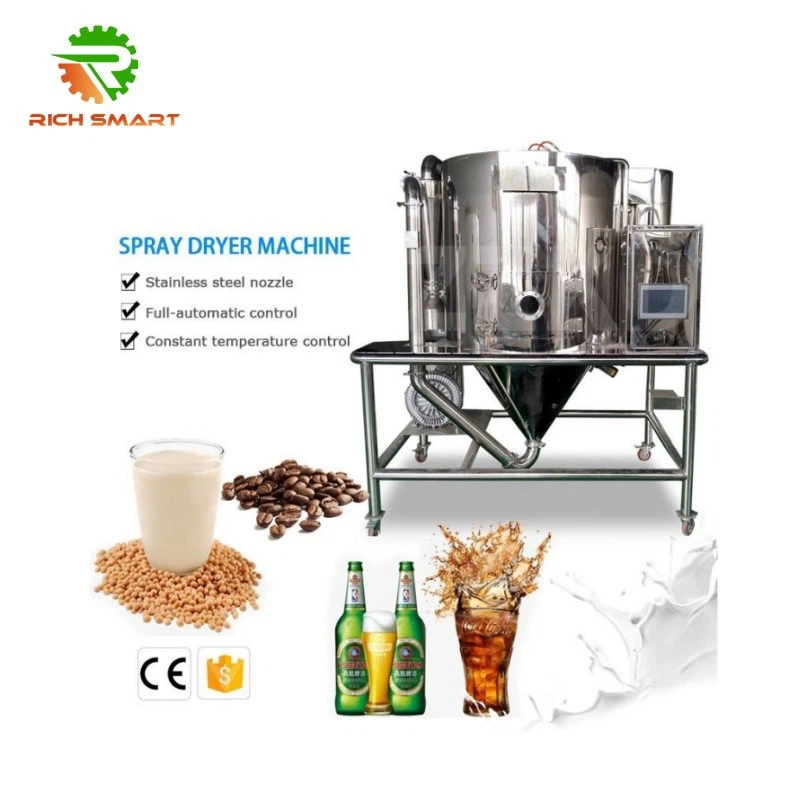
If you are interested in other types of drying equipment, we also offer a range of high - quality products. For example, our Microwave Vacuum Dryer Machine combines the advantages of microwave heating and vacuum drying, providing a fast and efficient drying solution. Our Small Spray Dryer is suitable for small - scale production and research purposes, offering precise control over the drying process. And our Automatic High - speed Centrifugal Spray Dryer is designed for large - scale production, with high - speed centrifugal atomization technology for efficient drying.
Conclusion
Improving the automation level of a Freezing Drying Vacuum Dryer is a continuous process that requires the integration of advanced technologies such as sensors, PLCs, HMIs, and system integration. By implementing these strategies, companies can achieve higher product quality, increased efficiency, and enhanced safety in their drying processes.
If you are interested in upgrading your Freezing Drying Vacuum Dryer or exploring our other drying equipment, please feel free to contact us for more information. We are committed to providing you with the best solutions to meet your specific needs.
References
- Smith, J. (2018). Advances in Industrial Drying Technology. Journal of Drying Science, 25(3), 123 - 135.
- Johnson, A. (2019). Automation in Pharmaceutical Manufacturing. Pharmaceutical Technology, 33(4), 45 - 52.
- Brown, C. (2020). Food Drying Processes: Principles and Applications. Food Science and Technology, 40(2), 78 - 89.